Stop Wrestling the Habit. Watch It Until It Gets Bored.

What if you keep losing to a habit because you treat it like an enemy?
Most advice is a pep talk about grit: resist the craving, white-knuckle the urge, punish the slip. That works until it doesn’t. The harder you shove the habit down, the more it comes back wearing guilt as extra fuel.
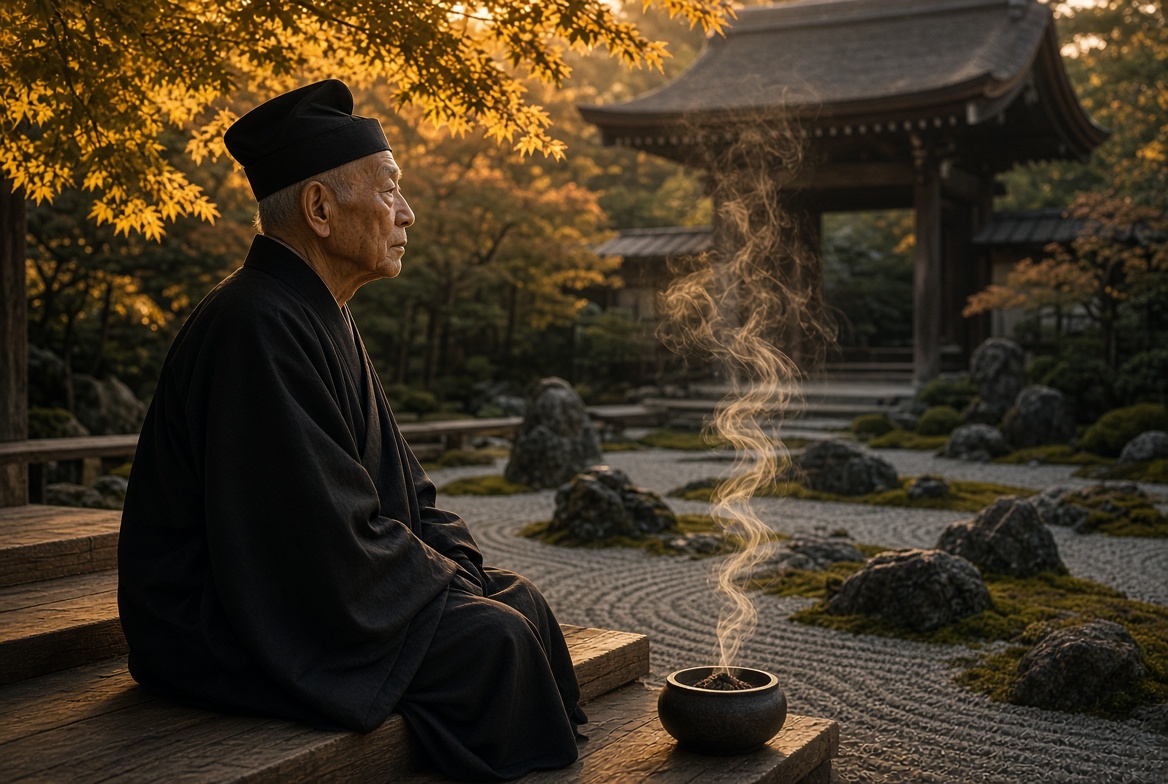
Japanese monastic practice points the other way. Don’t fight the urge. Don’t dramatize it. Don’t feed it with “I am a person who cannot stop.” Sit with it the way you sit with weather.
The smoker who ran out of wars
A common telling of this idea goes like this.
A man had smoked for twenty years. Patches, therapy, pills, hypnosis — years and money spent trying to overpower the habit. Nothing stuck.
On a work trip in Japan he met an older monk. He expected a lecture on discipline. He got something closer to a shrug.
The monk’s point, in various retellings, is some version of: you keep losing because you keep fighting. Fighting makes the habit important. Guilt is attention. Attention is food.
Within a few months the man stopped — not because he became a harder person, but because the craving stopped being a crisis.
Whether every detail of that story is literal is less useful than the mechanism it is trying to name.
Why force backfires
A habit is not a moral verdict. It is a loop: cue, urge, action, relief.
When you declare war, three things happen:
- The urge gets a spotlight.
- Failure becomes identity (“I have no willpower”).
- Relief after giving in feels even bigger, so the loop tightens.
Monastic attention training treats the urge as a visitor, not a commander. In Zen language this sits near practices like just sitting (shikantaza) and feeling without immediately judging (kanjiru in some popular essays). You do not use the feeling as a command. You use it as data.
You are not the craving. You are the one who can notice the craving.
What “observe” actually means
Not “think positive.” Not “pretend you don’t want it.”
When the urge shows up:
- Pause for one breath before you act.
- Locate it in the body: chest, hands, mouth, restlessness.
- Name it once, plainly: smoking urge, scroll urge, snack urge.
- Watch the peak. Most urges swell, crest, and drop in a few minutes if you don’t feed them a story.
- If you still act, act with the lights on. Notice taste, texture, the two seconds of relief, the aftertaste. Awareness is already a different circuit than autopilot.
The goal of the first week is not purity. It is to stop doing the thing in a trance.
That is why this can feel like “no willpower.” You are not squeezing the habit to death. You are taking it off automatic.
What this is not
It is not permission to binge while calling it mindfulness.
It is not a magic Japanese secret that replaces medical care for addiction.
It is not a claim that monks never use structure. Monasteries are full of structure: schedule, environment, silence, work, less stimulation. Observation works better when the room is not designed to trigger you every thirty seconds.
If the habit is severe — nicotine dependence, alcohol, compulsive use that is wrecking health or relationships — observation is a complement, not a substitute for treatment.
A small practice you can run today
Pick one habit. For seven days, don’t announce a forever quit.
Each time the cue appears:
- Wait 90 seconds.
- Write one line: what I felt / where in the body / what I did.
- No self-trial. Just the log.
You will see patterns: time of day, boredom, after a meeting, after a meal. Habits live in conditions. Change the conditions and the habit has less to grab.
If you want a second lever, add a tiny replacement in the same slot — walk to a window, rinse a cup, stand up — not as punishment, as a new channel for the same restless energy.
The strange part
The habit often fades when it stops being a story about who you are.
You don’t need to become a monk. You need a few seconds of honest attention between the spark and the action. That gap is where the loop loses its certainty.
Fighting says: this craving is me, and I must defeat myself.
Watching says: this craving is weather. I can stay in the room until it passes.
Reactions
Share this post
0 replies
Sign in with your Maxlayer account to join the conversation.